
HINTERLAND TIMES - Sheila’s Story
- Ronalyn
- 3 minutes ago
- 5 min read
Known by many hinterland locals for making delicious curries and samosas at Shali’s Cafe in Montville (now closed), most of us are unaware of the incredible life story of Susheila ‘Sheila’ Ramanand. It’s truly worthy of a book and a film. This is part one of an account of Sheila’s life, based on interviews with Sheila and her daughter, Shali, July – October, 2025.
by Cate Patterson


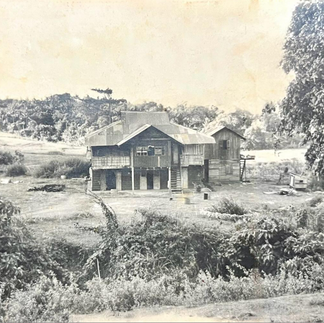


Susheila Ramanand was the fourth child born to Dr Ramanand and Sumitra Devi Ramanand. Her parents lived in a house rented from an uncle in Port Blair, the capital city of the Andaman and Nicobar Islands, a union territory of India in the Bay of Bengal. Sheila arrived on 5th January, 1939 in summertime when temperatures were in the 30°s C.
Dr Ramanand was the first doctor to be appointed to Port Blair and he worked at the hospital.
At the beginning of the war the British established a garrison at Port Blair but were unable to resist the occupation by the Japanese on 23 March 1942.
Sheila was just three years old when her father and mother, uncles and aunts, and her two older brothers aged just 8 and 7 years, along with many other intellectuals (mainly officials, and professionals such as engineers, lawyers and doctors) were imprisoned and tortured allegedly on suspicion of spying for the British.
At this time, the children would stay with different aunties. Sheila’s mother had four sisters, and it was the extended family that helped the Ramanand children survive.
Many members of the family were never seen again. Some of the imprisoned men were forced to dig a long trench and each was asked in turn if they had provided information for the British. When each one denied participating in any such activity he was shot and would fall into the trench he had just dug as the Japanese soldier turned his rifle to the next prisoner in the line.
Sheila remembers having to flee her home at night when the Japanese raided the houses. They escaped into the depths of the nearby jungle with its dense vegetation, twisted roots, thick vines, snakes and centipedes. They would return a couple of days later to find many of their belongings had been taken.
Sheila’s older brother eight-year-old Sharda Anand was a serious boy, who had been cruelly tortured. He was released after being interrogated and returned home with deep cuts on his back from cane whippings.
There were more violent accounts her family and others went through from this period - it was a horrific time for the island people.
The Japanese never did discover who was leaking information about the Japanese plans. In fact, it was an Andamanese local from another island, trained by the British soldiers, who inconspicuously moved about, often wearing just a lungi (a loin cloth for men), and even receiving food from the Japanese soldiers, who was the ‘spy’ sending messages to the British using his morse code machine.
In this way he was able to report that the Japanese were planning to force all of the people on the island into the many boats they would line up to take them out to the ships and then throw them overboard shooting any who did not drown.
That plan was ultimately foiled, and the British bombed the boats, effectively ending the Japanese plan to gain access to India via the Andaman and Nicobar Islands and saving the people of the islands from certain death.
Visiting the Cellular jail to visit her father was traumatic for Sheila. The children could only stand on the ground and wave up to the window where their father waved back to them. Sheila’s parents were eventually released after they too had been interrogated and tortured.
Witnessing these atrocities, and being subjected to so much terror and fear during the Japanese occupation, Sheila didn’t speak for the first five years of her life. It was only when her father heard her speaking to her brothers and sisters that he realised she could speak.
Dr Ramanand was not a traditionalist, but rather a progressive and enlightened father. He was very much the patriarch of the Ramanand extended family and highly respected as well in the wider community. He was strict but encouraged his children to develop their own beliefs, although they were a Hindu family. He wrote out a schedule of jobs for the children where they rotated each month through household work, including washing, cleaning, cooking, gardening, feeding animals and so on.
Sheila enjoyed all of these jobs and especially liked learning to crochet and knit with her mother.
After the war, Dr Ramanand was called to give evidence when the British took the Japanese to court in Rangoon (now Yangon), Burma. He was one of the few survivors, so many had been executed.
When school resumed, Sheila’s father, very much aware that his children had missed out on several years of education, accordingly put back their ages by two years in order to ensure they could attend school and then university afterwards.
The Ramanand family produced not only the first doctor on the island, but also Dr Ramanand’s brother was the first lawyer; and Sharda, Sheila’s oldest brother became the first engineer and Vivek became the first ship’s captain after working his way up from being a cabin boy.
When school resumed in 1946, Sheila enjoyed her time at the elementary school which provided classes up until Year 10. Lessons were taught in English. Badminton was a sport Sheila enjoyed, she became the badminton champion while she was at school.
She remembers the daily lunchtime deliveries by the tiffin boys who were paid to collect the tiffins (usually a 4-stack of metal containers with carrying handle, for transporting and keeping food warm). Sheila’s mother would make the lunches for her children and a tiffin boy would be paid to collect them and deliver them to the school. Tiffin lunches could include roti, rice, dal, vegetable curry, salad, yogurt, and even a small dessert.
The years after the war were happy ones for the Ramanand family. While the hospital was being rebuilt, there was no work there for the doctor and he could devote his time to his private practice, to fishing and hunting deer; and Sheila remembers helping repair the fishing net, scale, gut and fillet fish and hanging and skinning the deer, cutting and preparing the venison.
Dr Ramanand also set about building a home for his family. The house they had been renting from Dr Ramanand’s uncle was sold, and his Uncle gave them the land to build a house. Dr Ramanand secured a disused barracks left over from the war and soon the children were busy carting roofing iron and wall cladding to the site, removing old nails, polishing timber and their father with the help of a Burmese carpenter built them a lovely home.


